
Chhath Puja: Bihar’s Timeless Symphony of Nature, Equality, and Devotion
- Post By PoliticIndia.com on
- 15/Nov/2026

Dr. Khagendra Kumar
Chief Editor, Politic India: Media& Research
Chhath Puja stands as a global cultural ambassador—a four-day celebration where nature itself is the temple, the Sun is the visible manifestation of divine energy, and humanity gathers without barriers.
Chhath Puja is the living soul of Bihar and an enduring celebration of human gratitude, ecological harmony, and radical equality. Rooted in ancient Vedic traditions yet entirely stripped of rigid dogma, this four-day observance transforms riverbanks, lakes, and ponds into sanctuaries of peace, discipline, and shared devotion. In an age defined by complex rituals and social divisions, Chhath offers a remarkably simple and universal message: direct communion with the natural forces that sustain all life.
Ancient Vedic Roots and the Legend of Raja Karna
The origins of Chhath Puja stretch back to the dawn of Indian civilization, anchored in both Vedic hymns and epic history. Mentions of Sun worship and Arghya (sacred water offerings) appear in the Rigveda, where ancient sages invoked Surya as the primary source of life, energy, and cosmic order. Early Vedic texts describe rituals in which devotees stood in sacred rivers, absorbing the healing and purifying rays of the rising and setting sun.
According to the Mahabharata, the practice of standing waist-deep in water to offer prayers to the Sun God was pioneered in Bihar by Karna, the legendary ruler of Anga Desh (modern-day Munger and Bhagalpur). Born to Kunti and Surya, Karna was renowned for his unmatched generosity and unwavering devotion. Every morning, he stood in the waters of the Ganga at Munger to offer Arghya to his father, the Sun God, seeking strength and the welfare of his people—a sacred tradition still commemorated at Karna Chaura in Munger today.
The Four-Day Journey of Discipline and Devotion
Observed over four days of rigorous self-discipline, cleanliness, and meditation, Chhath Puja gradually elevates both mind and body toward pure gratitude.
The first day is known as Nahay-Khay (Bathe and Eat), during which devotees take a purifying dip in a sacred water body and prepare a single pure vegetarian meal of bottle gourd (lauki), Bengal gram (chana dal), and rice on an earthen stove (chulha) using mango wood and rock salt, marking physical and mental purification and cleaning the home and body to begin the sacred observance.
The second day is Kharna (Purification and Fast), where devotees observe a strict waterless fast from sunrise to sunset, and in the evening, after worshipping the Sun and Moon, they break their fast with jaggery rice pudding (rasiya) and chapatis before beginning a continuous 36-hour nirjala (waterless) fast, cultivating intense inner discipline, self-restraint, and detachment from sensory indulgences.
The third day brings Sandhya Arghya (Evening Offerings), as families walk in procession to riverbanks carrying bamboo baskets (soop and tokari) filled with seasonal fruits, sugarcane, and Thekua, standing waist-deep in water to offer Arghya of water and milk to the setting sun, honoring the twilight and completion of life's cycles while expressing gratitude for the day's sustenance.
Finally, the fourth day features Usha Arghya and Paran (Morning Offerings), where before dawn, devotees return to the water's edge to welcome the first rays of the rising sun with final offerings, after which the varti breaks the 36-hour fast with ginger and jaggery (Paran) and shares prasad, celebrating renewal, hope, and the triumph of light in a conclusion defined by communal sharing and blessings.
Radical Egalitarianism and the Abolition of Hierarchies
One of the most profound aspects of Chhath Puja is its complete dissolution of social boundaries. On the banks of rivers and ponds, the distinctions of caste, class, wealth, and status vanish entirely. Because the worship requires no priest, there is no ritual gatekeeping; every devotee (varti) communicates directly with the divine. A corporate executive and a daily-wage earner stand shoulder-to-shoulder knee-deep in the same water, performing the exact same rigorous austerities. The strict personal cleanliness and fasting required across all four days apply equally to everyone, demonstrating that spiritual purity stems from inner discipline and humility rather than inherited privilege.
Deep Ecological Wisdom and Sustainable Living
Long before modern sustainability movements emerged, Chhath Puja practiced radical ecological mindfulness. The entire observance relies on biodegradable, locally sourced materials. Terracotta pots (mitti ke bartan), earthen stoves (chulha), bamboo baskets (soop and tokari), cotton garments, and organic offerings—seasonal fruits, sugarcane, native rice, wheat flour, and jaggery (Thekua)—ensure the festival leaves virtually no plastic waste or carbon footprint. Furthermore, by centering rituals around rivers, lakes, and community ponds, the festival instills an innate civic duty to clean, protect, and revere local water bodies as sacred lifelines.
Gratitude to the Entire Ecosystem and Local Artisans
While the Sun God (Surya) and Chhathi Maiya are the focal points, Chhath is fundamentally a celebration of universal interdependence. Devotees offer gratitude to the Sun for energy, Water for life, Earth for nourishment, and Air for sustenance. Equally significant is the festival's quiet economic solidarity: the mandatory use of bamboo winnowing fans (soop) and terracotta cookware directly supports traditional potters and marginalized artisan communities. By placing their handmade goods at the center of sacred worship, Chhath sustains rural economies and honors the dignity of manual labor.
The Philosophy of Balance: Honoring Both Dusk and Dawn
The dual Arghya—first to the setting sun (Sandhya Arghya) and then to the rising sun (Usha Arghya)—is among the most unique philosophical teachings in world traditions. While most traditions celebrate only beginnings, ascendance, and youth, Chhath pays its first and deepest respects to the setting sun. This gesture teaches that decline, twilight, and endings are natural stages worthy of reverence. It fosters a quiet psychological resilience—a faith that everything that sets carries the promise of rising again.
Folk Songs: The Oral Archive of Memory and Devotion
No Chhath Puja is complete without the haunting, unaccompanied melodies of traditional folk songs (Chhath Geet), passed down orally across generations and famously immortalized by icons like Sharda Sinha. Sung in Bhojpuri, Maithili, and Magahi, these songs are not mere musical accompaniment; they are living historical and emotional records.
Lyrics such as "Kaanch Hi Baans Ke Bahangiya" (The basket made of tender bamboo) and "Kelwa Ke Paat Par Ugalan Suraj Mal" (Lord Surya rises over the banana leaves) weave the agricultural landscape, river systems, and flora of the Gangetic plains directly into spiritual verse. Historically composed and sung primarily by women, these songs articulate the unspoken prayers of mothers for their children's well-being, the longing of families separated by migration, and subtle social critiques—often asking the Sun God to bless all households equally, regardless of social standing.
A Global Cultural Anchor for the Diaspora
For millions of people from Bihar and eastern Uttar Pradesh living far from their homeland—across Indian metropolises or in countries like Mauritius, Fiji, the United States, and the United Kingdom—Chhath Puja serves as an unbreakable cultural anchor. Wherever they settle, communities transform local riverbanks and ponds into vibrant spaces of shared memory, bridging oceans through familiar folk melodies, the aroma of freshly fried Thekua, and collective devotion.
"In an era often divided by narrow identities and disconnected from the natural world, Chhath Puja offers a timeless blueprint for harmonious living."
Free from bigotry and extravagance, Chhath Puja reminds humanity that true spirituality lies in simplicity, gratitude toward nature, and respect for every individual. If the quiet, unifying spirit of Chhath continues to guide public life, it holds the power not only to illuminate Bihar—the ancient cradle of democracy—with renewed glory, but also to inspire a more compassionate and sustainable world.

BLOG

छठ पूजा: प्रकृति, समानता और भक्ति का बिहार का शाश्वत संगीत
Read More
Chhath Puja: Bihar’s Timeless Symphony of Nature, Equality, and Devotion
Read More
Saving University Autonomy: Why Teachers Must Act Without Sacrificing the Classroom
Read More
Saving University Autonomy: Why Teachers Must Act Without Sacrificing the Classroom
Read More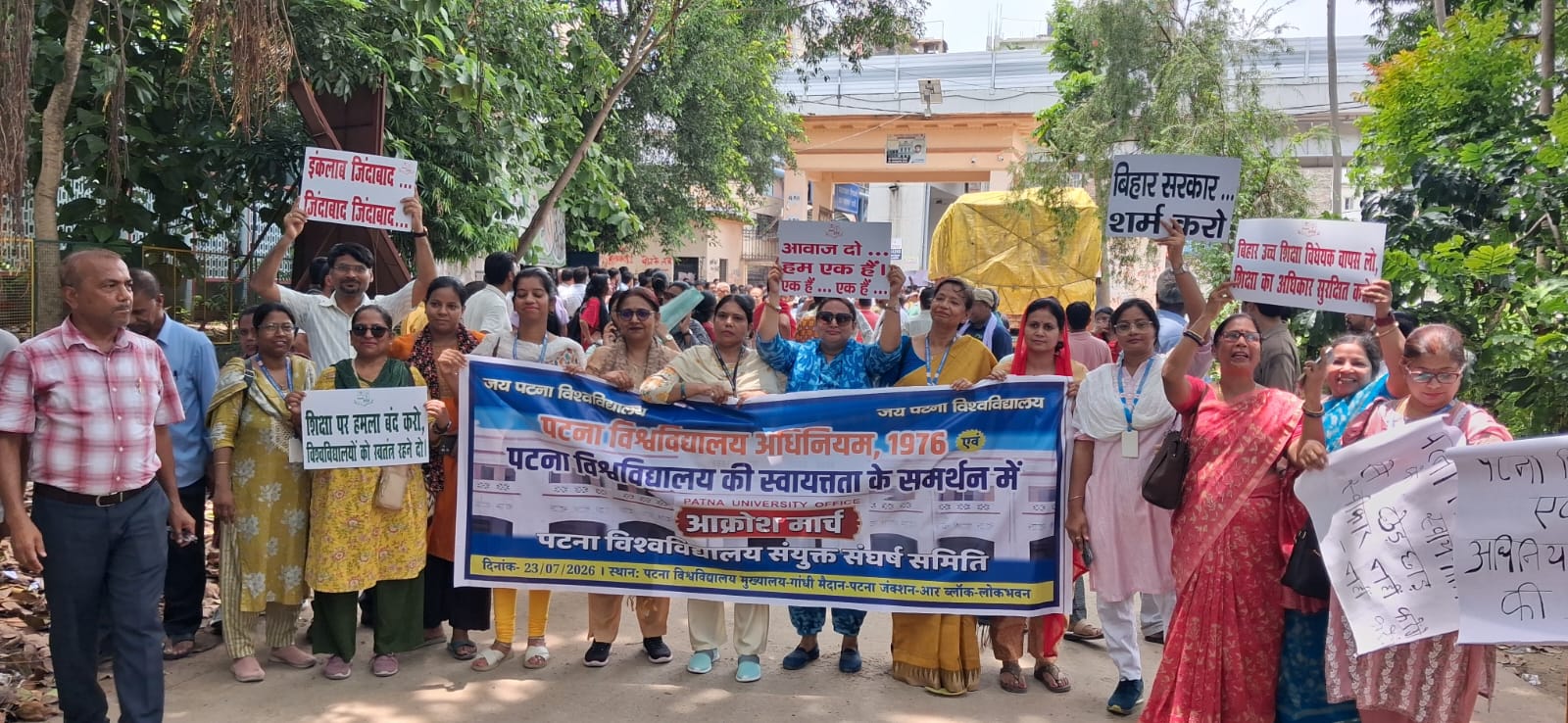
उच्च शिक्षा, स्वायत्तता और नौकरशाही का अतिक्रमण: प.वि.वि. के संदर्भ में एक गंभीर आत्ममंथन
Read More