
Save Aravalli: Why a 100-Metre Definition is a Death Warrant for Our Ecosystem
- Post By PoliticIndia.com on
- 22/Dec/2025
Khagendra Kumar
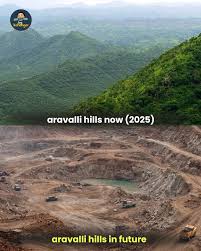
The Aravalli Range, one of the world's oldest mountain systems, is facing an existential threat—not from a natural disaster, but from a legal definition. Following a recent decision regarding the definition of a hill based on its height, the floodgates have been opened for the exploitation of this fragile ecosystem by greedy entrepreneurs and corporate interests.
The 8% Fallacy
Under the new technical criteria, it is estimated that only about 8% of the Aravalli hills will retain protected status. The remaining 92% are now vulnerable to mining and industrial development. This is not just a loss of landscape; it is a direct hit to our survival.
- Environmental Barrier: The Aravallis act as a shield against the desertification of Northern India.
- Water Security: These hills are vital for groundwater recharge in Rajasthan, Haryana, and Delhi.
- Biodiversity: They house unique flora and fauna that cannot be relocated.
Lessons from the Past: From Silent Valley to Aravalli
The world is currently struggling to save the environment, yet in India, the mainstream media remains largely silent on the Aravalli protests. This silence is reminiscent of the early days of the Silent Valley movement in Kerala. That movement, led by the Kerala Sastra Sahitya Parishad (KSSP), proved that when scientists, teachers, doctors, and farmers unite, they can halt the destruction of a Treasure of Life.
As someone who has dedicated years to researching the KSSP—India’s largest people's science movement—for my PhD, I see the same spark in the current- SaveAravalli campaign. My interest in New Social Movements (NSM) and environmental ethics convinces me that we are at a tipping point.
We must reject the idea that mountains can be reduced to mere height requirements for the sake of business ease. All political parties and environmental groups must converge. If we lose the Aravallis, we lose the lungs of North India.
Click the following link that provides a detailed breakdown of the recent legal rulings and the specific environmental risk facing Aravalli Hills . shttps://www.youtube.com/watch?v=I54R3ni3Mok
About the Author: The author is a Professor of Education at Patna University. He holds a PhD focused on the Kerala Sastra Sahitya Parishad (KSSP) and has a deep academic and personal interest in New Social Movements and global environmental conservation.
BLOG
Saving University Autonomy: Why Teachers Must Act Without Sacrificing the Classroom
Read More
Saving University Autonomy: Why Teachers Must Act Without Sacrificing the Classroom
Read More
उच्च शिक्षा, स्वायत्तता और नौकरशाही का अतिक्रमण: प.वि.वि. के संदर्भ में एक गंभीर आत्ममंथन
Read More
The Perils of Bureaucratization in Higher Education of Bihar
Read More
The Erosion of University Autonomy: A Call for Consultative Governance in Higher Education Institutions of Bihar
Read More