
Why Universities of Bihar are Suffering—and How to Rescue Them
- Post By PoliticIndia.com on
- 28/Dec/2025
Khagendra Kumar
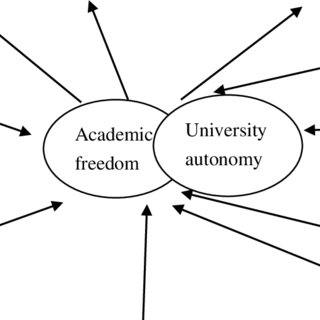
The National Education Policy (NEP) 2020 promises an India-centric education system built on institutional autonomy and academic freedom. However, in Bihar, we are witnessing a crisis of independence. Instead of freedom, our universities face state-led micro-management and a fundamental mistrust of academic bodies.
If we want world-class institutions, we must restore the soul of the university. Here is why the current model is failing and what we must demand for change.
1. The University is a State, Not an Instrument of the Government
Public Higher Education Institutions (HEIs) cannot be treated as contrived instrumentalities used to justify the state's own administrative purposes.
The Sovereign Entity: The university should be treated as a state in its own right, empowered to make its own sovereign decisions regarding teaching-learning, research, and innovation.
Knowledge vs. Bureaucracy: The bureaucracy must be kept away from meddling in internal university affairs.
Shift in Power Dynamics: Bureaucrats must learn to behave as knowledge seekers from the university, rather than giving sermons to the academia.
2. The Accountability Paradox: Expectations Without Power
State authorities demand high-quality outcomes while simultaneously stripping institutions of the power to make essential decisions.
The Conflict: Accountability cannot be fixed on a university if its curriculum, attendance protocols, and evaluation methods are dictated by external agencies.
The Reality: While NEP 2020 calls for a light but tight regulatory approach, current model of Bihar is heavy and stifling, replacing academic leadership with bureaucratic compliance.
3. The Need for Visionary and Competent Leadership
Success of a university depends entirely on the calibre of its leadership. We need more than administrators; we need Academic Statesmen.
Academic Competence: Leaders must be visionaries of high academic standing who understand the core mission of global research and teaching.
Bureaucratic Resilience: The university needs leaders capable of handling immense bureaucratic pressure without compromising integrity the institution.
Protective Leadership: A competent leader must act as a buffer, shielding the university from dictats that bypass the authority of Deans, Heads of Departments, Principals of Colleges.
4. Resisting Statutory Erosion
The traditional governance structures—the Senate, Syndicate, and Academic Council—have been marginalized into mere formalities.
Curriculum Imposition: Syllabi designed externally are "thrust" upon universities, ignoring the specialized expertise of faculty members.
Culture of Fear: Passing dictats for micro-details (like daily attendance monitoring by external bodies) creates a culture of fear rather than a culture of inquiry.
5. Ending the Landlord-Tenant Financial Model
The current funding system is conditional and patronizing rather than supportive.
The Utilization Trap: Funds are released with innumerable directions and are often transferred back to state construction agencies.
Loss of Control: The university loses control over the quality and speed of development, yet remains legally responsible for fund utilization, leading to chronic budget underutilization.
6. Security and Insulation from Political Coercion
The university must be a sanctuary for thought, provided with adequate security to ensure its functions are never disrupted.
Institutional Safety: We must insulate the campus from the wrong demands of powerful politicians, bureaucrats, and students with political backup.
The Conscience of the Nation: Only when protected from external interference can the university serve as the conscience of the nation and a true partner in development.
The Call to Action: Our Demands for Reform
The path to quality education in Bihar is through trust, not dictats. We demand:
Immediate Restoration of Autonomy: Return management of teaching, learning, and evaluation to the academic administration.
Institutional Sovereignty: Treat the university as a self-governing entity capable of its own appointments, resource management, and internal governance.
Visionary Leadership: Appoint academically competent leaders who can resist bureaucratic meddling.
Financial De-centralization: Provide block grants that allow universities to manage their own infrastructure and research priorities.
Dignity for Educators: Align state actions with the NEP 2020 goal of restoring the respect and status of the teaching profession.
Until the respect of teachers is restored, the goals of national policy can never be achieved. — NEP 2020
BLOG
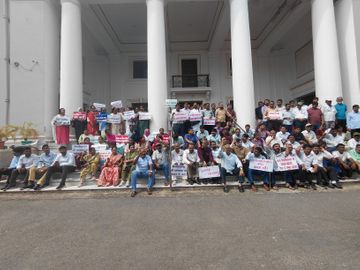
Saving University Autonomy: Why Teachers Must Act Without Sacrificing the Classroom
Read More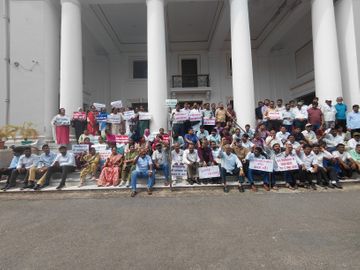
Saving University Autonomy: Why Teachers Must Act Without Sacrificing the Classroom
Read More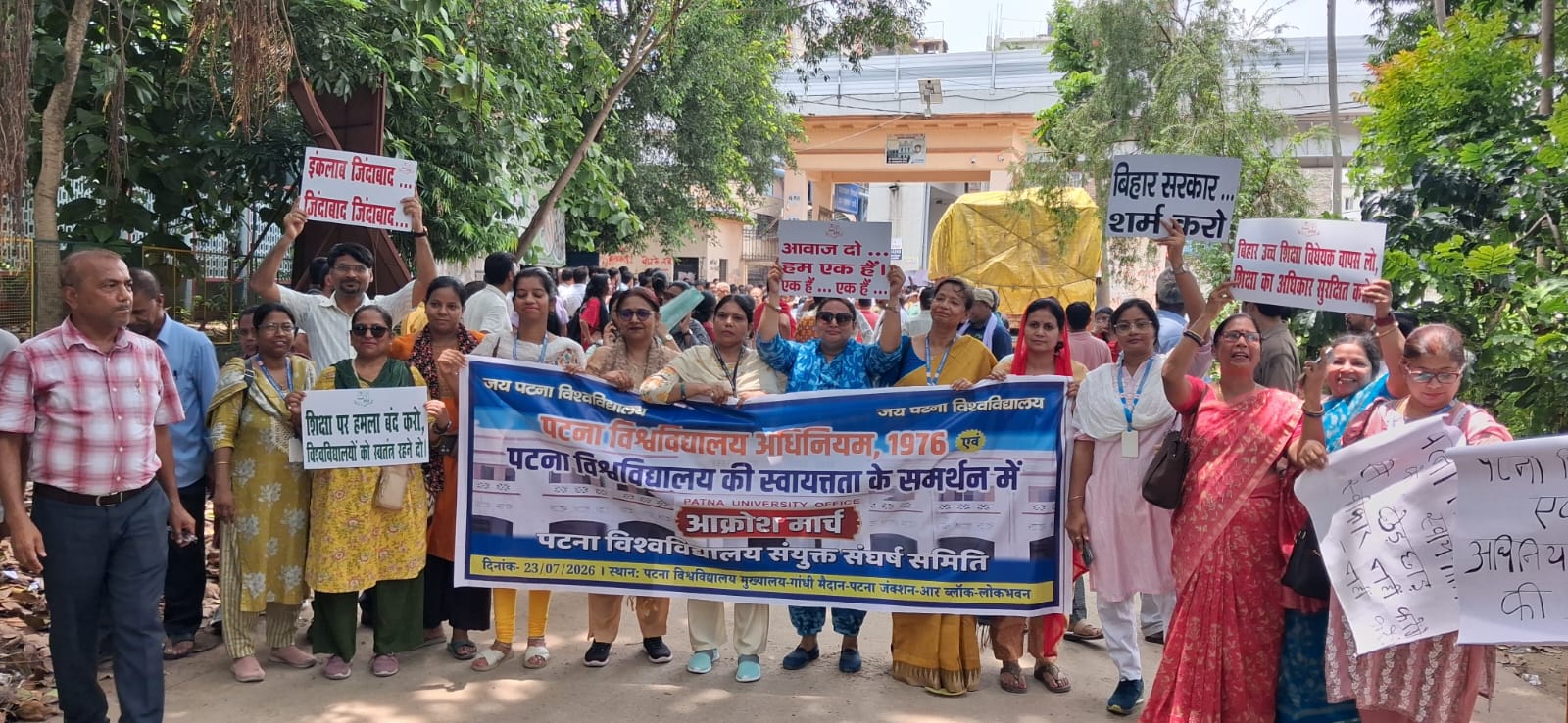
उच्च शिक्षा, स्वायत्तता और नौकरशाही का अतिक्रमण: प.वि.वि. के संदर्भ में एक गंभीर आत्ममंथन
Read More
The Perils of Bureaucratization in Higher Education of Bihar
Read More
The Erosion of University Autonomy: A Call for Consultative Governance in Higher Education Institutions of Bihar
Read More